



Pobierz białą księgę
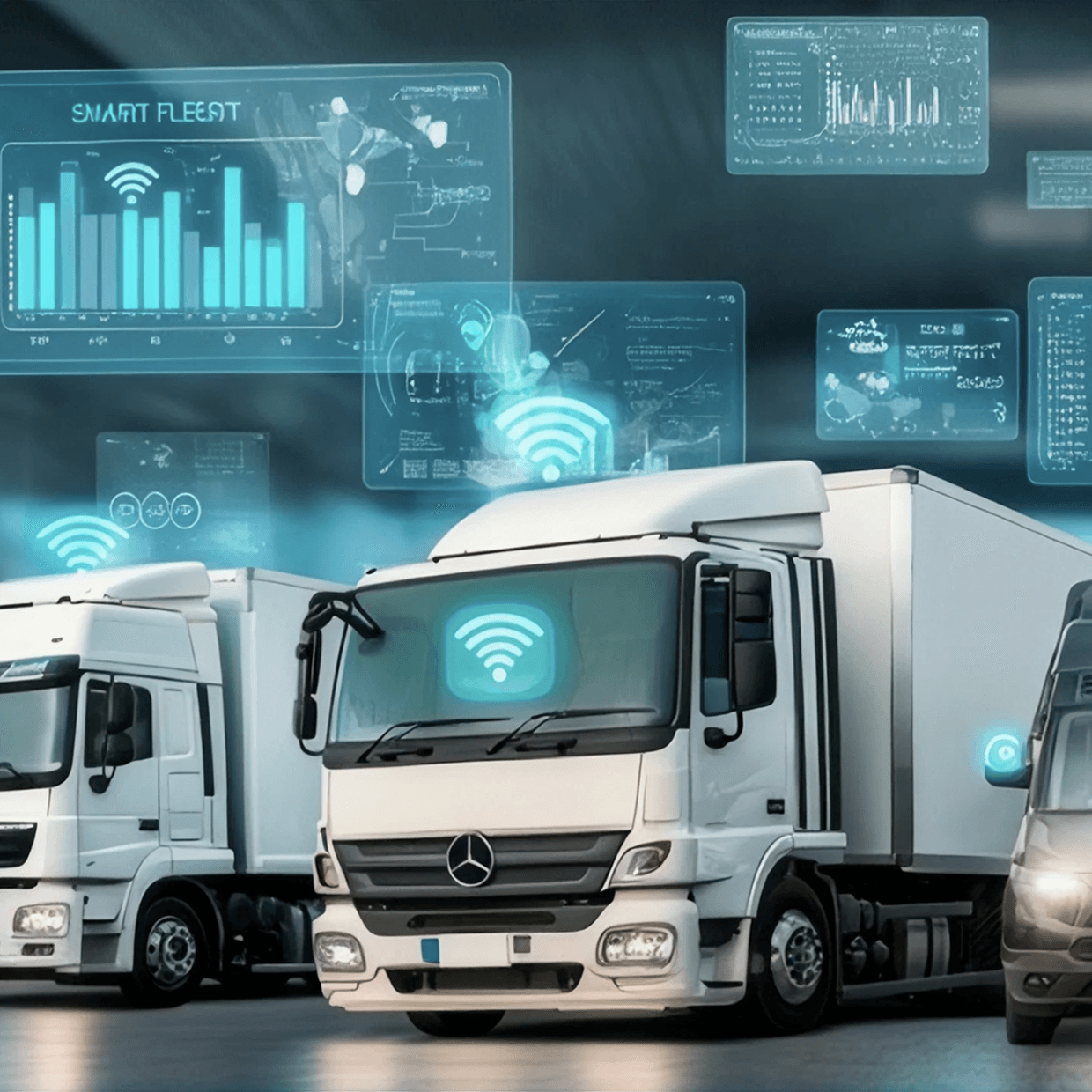
Connected fleet platform and Fleet Management services: to design and develop a customized Connected Fleet /Telematics platform with open application programming providing an interface for external systems enabling salient fleet management use-cases e.g.:
Live Fleet Visibility – to provide fleet operators real-time access to the location and status of every vehicle in the fleet on the map to have better visibility and control of critical fleet resources, increasing productivity by:
- Monitoring how drivers operate vehicles
- Predicting vehicle arrival time with respect to specified destinations
- Raising alerts and notifications through screen pop-ups, SMS, and e-mail on violations like speeding, harsh braking, off-hour operations, zone or region violations, emergency (e-call)/breakdown (b-Call), driver identification failure, temperature thresholds, Stolen Vehicle Tracking (SVT), overload detection, etc.
- Tracking drivers’ driving hours and rest hours related infringement
- Monitoring engine idling and performance of other major vehicle systems
Fleet Safety and Security – Improves driver and vehicles safety and reduces the Risk of Liability by managing excessive speeding by driver, tracking maintenance requirements, raising violation alarms for route deviation or un-scheduled usage/stoppage and establishing two-way communication between driver and fleet manager
Fleet Maintenance – increase vehicle availability by monitoring vehicle maintenance schedule and identifying potential issues before they become significant problems to avoid costly measures in the future by
- Raising predictive maintenance alerts based on real-time events and fault data to stakeholders, including dealers and workshops, to reduce unplanned vehicle downtime.
- Maintaining a history of maintenance activities to analyze costs and monitor trends in wear, neglect, and exploitation of vehicles.
Fleet/Driver performance Monitoring – using Fleet Dashboards and reports to steer critical fleet and driver performance indicators such as
- Fleet key performance indicators (KPI) monitoring
- Summary and trends of driver’s eco scoring for past periods
- Driver scorecard based on fuel consumption and driving behaviour to identify best/worst drivers
- Number of events occurred, such as over-speeding and harsh braking
- Vehicles not plying on designated routes
- CO2 emissions monitoring
- Fuel benchmarking and deviation
- Comparison of KPI with corresponding vehicle group averages and industry benchmarks
- Vehicle/fleet utilization report
Multi-tier Communication – to improve information and knowledge sharing by efficiently communicating with drivers, informing customers ahead of time when a driver is going to be delayed, alerting customers when a driver has reached an important site, or delivery location.
Legislative Compliance and Regulations- for adhering to vehicle safety, emissions, and driver hours-ofservice regulations and laws. Fulfilment of legal requirements of data archiving/ management in accordance with regulations for Commercial Fleet and Driving Personnel, in addition to tracking of infringements.
Device Management – management of device lifecycle (i.e. device provisioning, automated activation/ deactivation, commissioning). Provisioning field devices on the fleet backend platform after validating device parameters and security certificates. Decomissioning of devices based on parameters like subscription optout or others.
The above use cases can cater to the needs of different Industries e.g. Automotive, Transport, Logistic and Insurance Industry etc..